

Tidy-Up Time: Pause Cards
Overcoming Resistance to Putting Toys Away

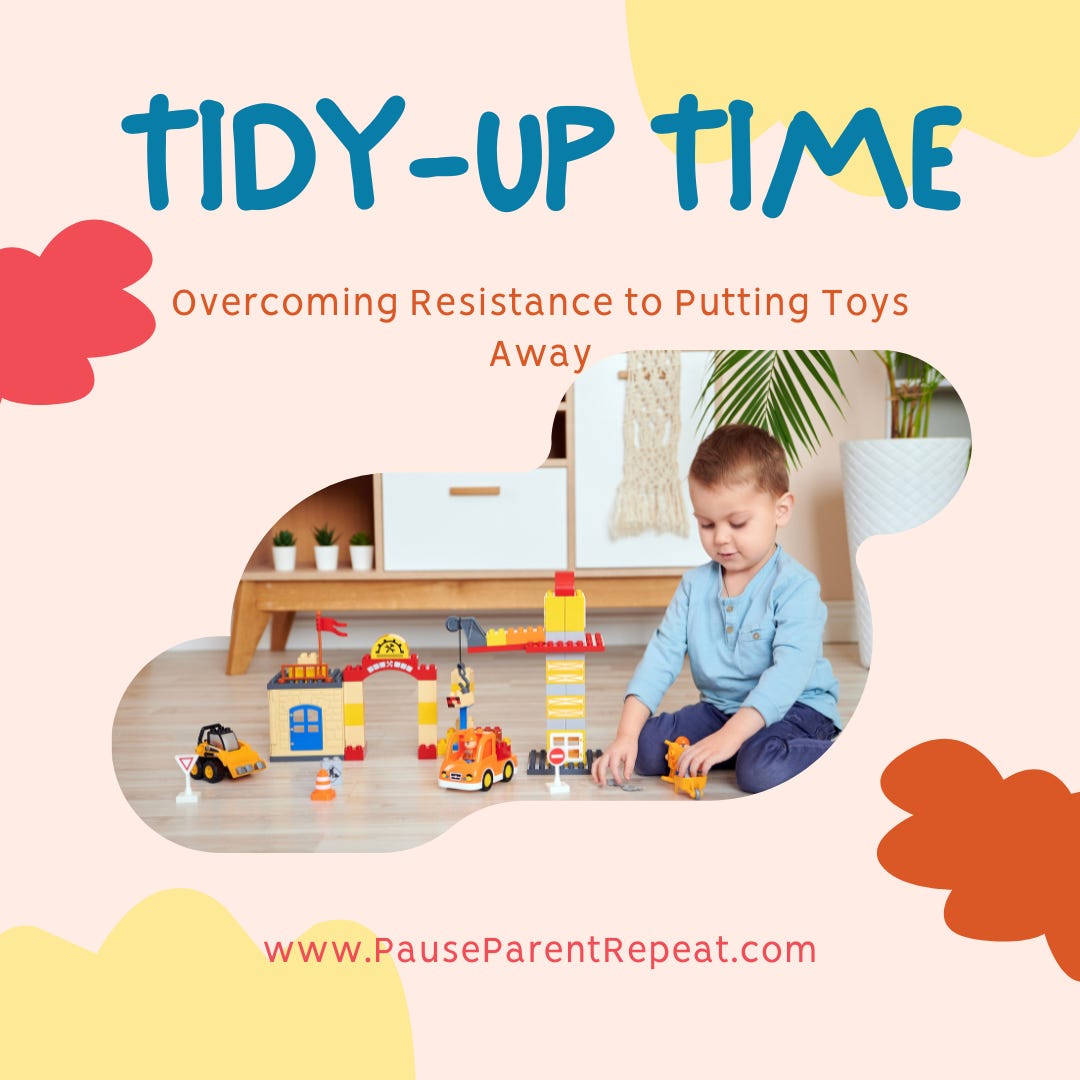
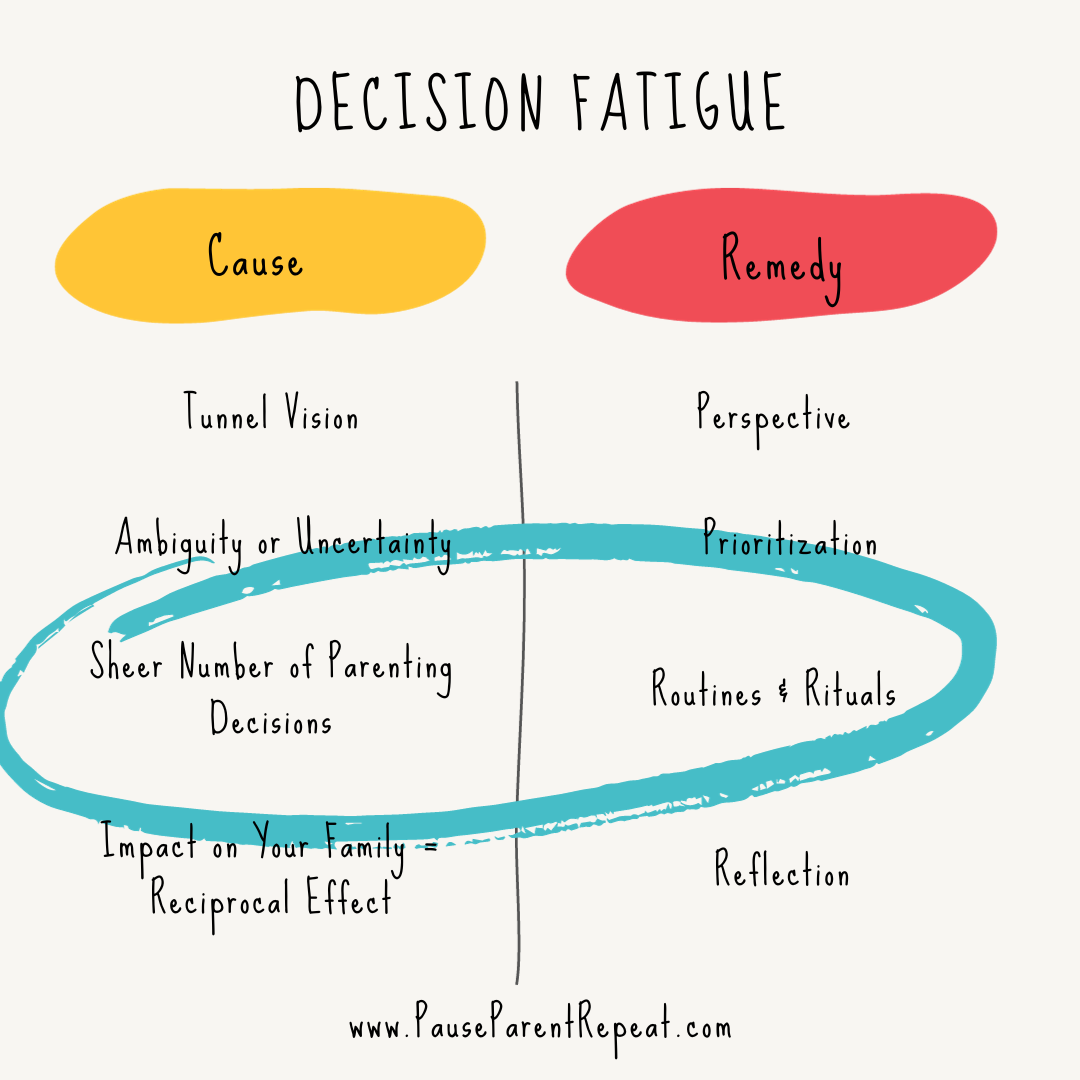
Lately, the majority of the time when we begin our Tidy-Up Playlist, our 3 year-old, 5 year-old or both are incredibly resistant. Instead of focusing on putting things away, the negotiations begin. "Can we please please keep the fort up?" "We are still farming and our crops are not ready for harvest." "I need to keep my house because I am not done building it." And so on... Each time is decision time. Weighing pros and cons of leaving something out, trying to communicate rationally while our young children show their attachment to what they have been playing with.
Tools for Tidying-Up
If you're curious to learn more about how to design a routine with young children in mind - have no fear - it will eventually be written. For now, I'll focus on one tangible tool specific to Tidy-Up Time:
PAUSE CARDS - a communication tool
Whether you have a tidy-up routine you do with your children or if you do all the tidying yourself - PAUSE CARDS work because they decrease the likelihood of emotional meltdowns with relation to tidying-up which makes Tidying-Up, itself, more likely to happen.
Need For A Communication Tool
After a few too many moments of big feelings, negotiations and/or outright refusals to join in our Tidy-Up routine, I took a step back to look at what may be contributing on a deeper level.
This may sound familiar... the tidying is taking place or has already taken place and all of a sudden - crying. Soulful, deep crying because, unbeknownst to you - a project has been cleaned up before it was finished. Let's take a moment to recognize that these feelings are valid. As humans, we work in phases and sometimes we need more time with a project and other times, even if we're done, we're not ready to part with our hard work. Imagine your work disappearing - this could look like your computer crashing, a document not saving or a lost phone and along with it the photos you hadn't backed up.
While there is nothing you can "do" to recover the work - you can feel your feelings and make a better plan to prevent a similar misfortune from happening in the future.
Enter - PAUSE CARDS
A Pause Card is a kid version of "saving their work".
Super Simple to Use
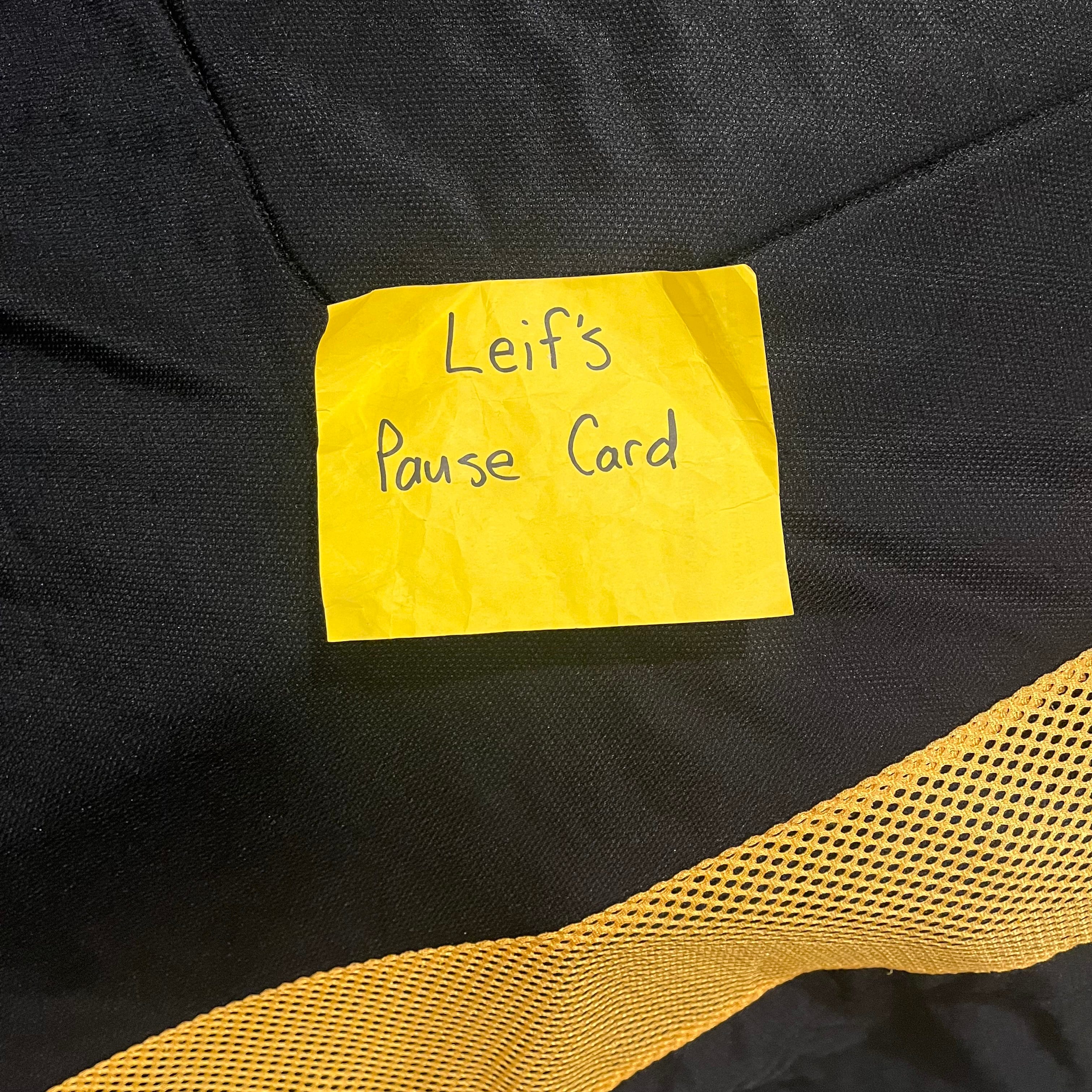
Each child gets 1 pause card, which means that they can have 1 thing "PAUSED" at any point in time. They use their PAUSE CARD by placing it next to their work. "Work" meaning any toy or set of toys, craft, book, etc - anything they play with or create with.
PAUSE CARDS remove a potential obstacle from initiating the routine in the first place.
Sometimes children don't want to clean up because they aren't done yet. This solves that problem. Knowing that they can PAUSE 1 thing they are much more open (and more likely) to jump in and contribute to tidy-up time.
PAUSE CARDS build trust.
If they aren't tidying with you (yet) they communicate what is most important to the child and that makes you allies - you are able to protect their important work AND enjoy a tidy space.
Even if they never return to their PAUSED work, you have provided and the time they needed to adjust, self-regulate and become ready (for example, to deconstruct the tower they worked hard to build).
They also prevent the important work from being "lost" because they are honored by everyone in the house - this includes siblings during play.
PAUSE CARDS work regardless of who is doing the tidying.
PAUSE CARDS share power and control with child(ren) appropriately.
When are children ready for PAUSE CARDS?
In short - when they show you they are. I recognize that this answer is in the grey area - as much of parenting is. The thing is, as children grow, so does their capacity to have expectations, plan ahead, and communicate proactively. Expectations come first and without the ability to plan ahead and communicate - they need a tool to help them. You'll know your home is ready for PAUSE CARDS when one or both things begin happening.
The child begins resisting Tidy-Up Time/Clean-Up/Whatever you like to call it
The child is upset when they discover a project they "were in the middle of" has been cleaned up - when last week, that was not an issue.
If your child(ren) are not showing a need for PAUSE CARDS - there is no need to introduce PAUSE CARDS. If you introduce them before children are ready it won't make sense and won't be solving a problem, but may possibly create new ones.
So, if your child(ren) aren't having any issues with their work being put away - ride the way and put this in your back pocket for when or if they do.
Another advantage of waiting for readiness is that you authentically model the process of finding a solution while simultaneously demonstrating that you are on the same team and desire the same things which strengthens your relationship and builds trust. In other words, you are showing them that you are listening and that you care about what is important to them while simultaneously meeting a need.
Our PAUSE CARDS, as you can see, are quite rudimentary - just a piece of colored paper with their name and the words PAUSE CARD written on them. Because they are working so well and because I wanted something you can easily print - feel free to download this version of PAUSE CARDS and fill in your child's name.
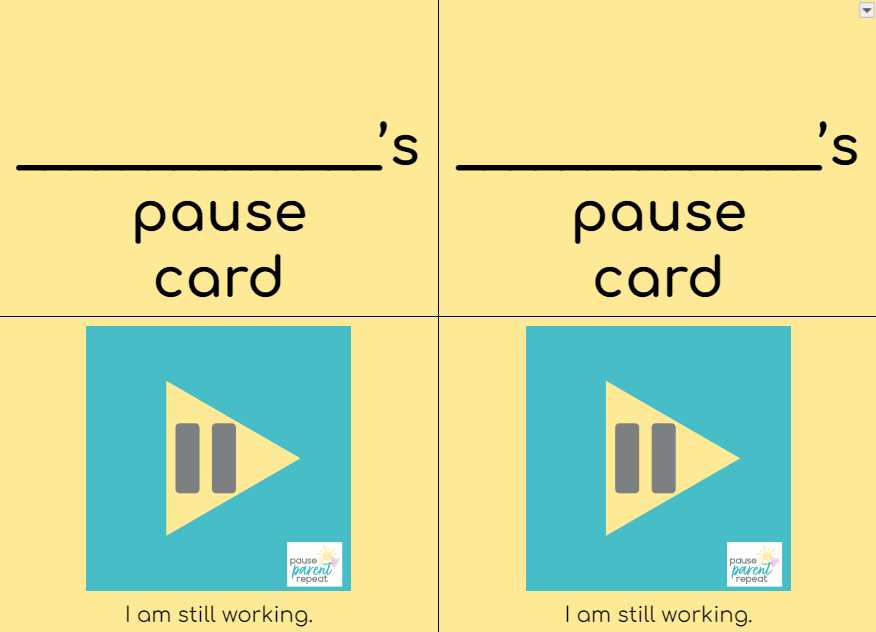
If you decide PAUSE CARDS might be a good fit for your family - remember this -
The human brain is a pattern seeking machine. The more consistent you are with the use of PAUSE CARDS the more likely it is for a pattern to emerge.
Best of luck to you! I hope that you feel some relief from the decision fatigue that accompanies the parenting of young children.
For us - we are optimistic about reclaiming our evenings by embracing our Tidy-Up Routine once again!
Looking for more? Come visit us at www.PauseParentRepeat.com